
Start with the vehicles you actually run
A fleet can grow one vehicle at a time. A Richmond-area plumbing company might start with a pickup, add a short cargo van, and pick up a high-roof van when the crew expands. Then comes the awkward part. The owner wants the fleet to look like one company, but every vehicle has a different shape and somebody needs each one on a job Monday morning.
Start by listing the year, make, model, body color, and usual assignment of each vehicle. Photograph both sides and the rear of each one. Include racks, utility beds, windows, and aftermarket accessories in the pictures. Mark which units can spend time in the shop and which are booked on jobs you can’t easily move. The list gives your designer the right dimensions to work with and gives dispatch a say before dates go on the calendar.
Set a visual standard the whole fleet can share
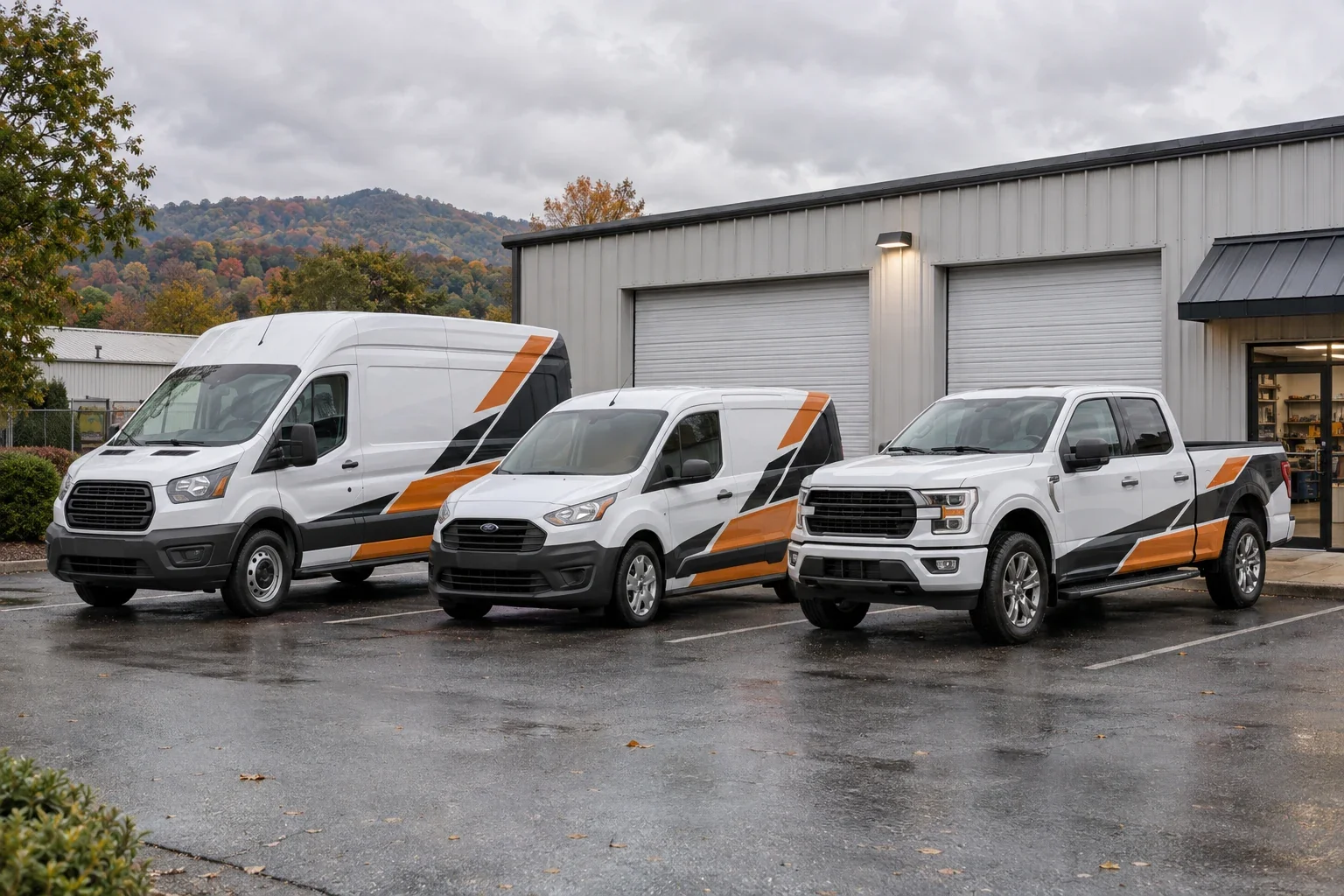
Choose a few things every vehicle should carry, such as the logo, a recognizable color block, and the same short service line. A high-roof van might put the logo high on the side, while a pickup may have its cleanest space on the front doors. Give the designer room to adjust placement and scale so both vehicles read clearly on their own.
Vehicle color matters, especially with partial coverage. If half your fleet is white and the other half is silver, ask to see both colors in the proof. A white area you’ve left exposed on one van may need to be printed on a darker truck to keep the contrast you approved.
Send Black Star Wraps your vehicle list and photos. We’ll help you decide which unit to start with and how to carry the design across the fleet.
Use one installation to answer questions for the rest
Pick a vehicle that represents a common body style in your fleet and is reasonably easy to spare. When it’s finished, park it where customers usually see it and walk past from the street. If your sliding doors stay open at most jobs, open them and look again. You may spot a phone number that disappears or a service line that needs more breathing room. Make those changes before the next set of graphics is produced.
Take photos of the finished vehicle from all sides and keep them with the approved artwork and color references. When a new van arrives months later, you’ll have a record of what was installed and a starting point for fitting the design to the new body.
Put the rollout on the dispatch calendar
Schedule in waves around the work your company already has booked. If two vans carry the same equipment, send one while the other stays available. If a supervisor’s pickup can be swapped out for a day, that might be your simplest second appointment. Confirm drop-off and pickup with the shop before you shift routes, and leave room to move a vehicle to a later slot if an urgent job comes in.
Staging also gives you a way to manage a rebrand. Put the new design on the vehicles seen most often first, then transition lower-mileage units as their schedules open up. A phased rollout works best when someone owns the calendar and knows which units are next.
Ready to plan a fleet wrap around your workweek? Request a commercial fleet quote from Black Star Wraps in Carson, VA.